Talking therapies, including psychology and cognitive behavioural therapy (CBT), can be helpful for many people by offering structured support to explore thoughts, feelings and behaviours. These approaches usually rely on a person’s ability to reflect on their experiences, talk about their challenges and put agreed strategies into practice between sessions.
For some people, including children and adults with disabilities, people with complex communication needs, and people living with dementia, these skills can be difficult to access. This doesn’t mean they cannot benefit from therapy. It means we may need a different way to engage with them. Music therapy offers another way forward.
Music Therapy: Communicating Beyond Words
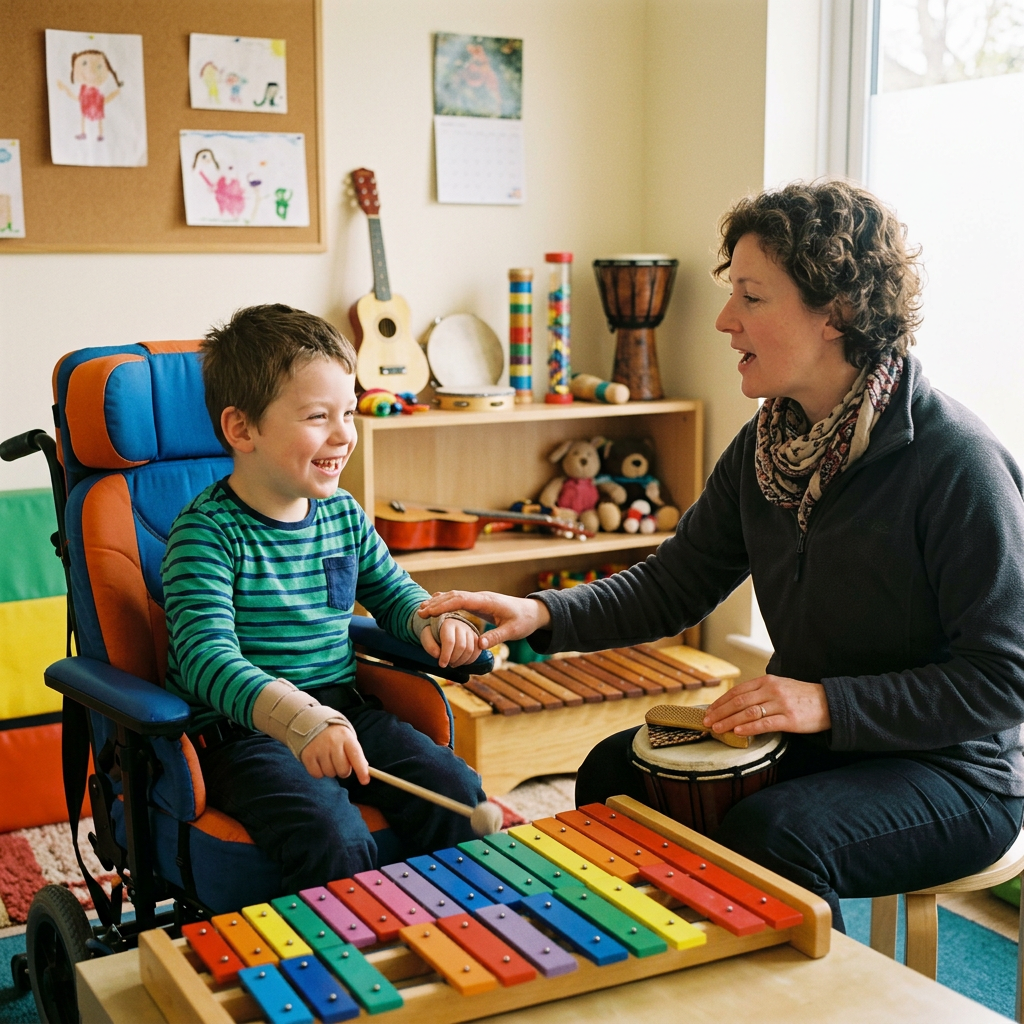
Music therapy uses music as a means of communication, expression and connection. Rather than relying on conversation, a music therapist works directly with the person through live music-making, using instruments and musical activities that don’t require any previous musical skills.
Through music, people can explore their emotions, communicate in their own way, build relationships and develop emotional regulation. The therapist adapts the music and activities to the person’s abilities, interests and needs.
This can be particularly valuable for people who find it difficult to communicate verbally or engage in traditional talking therapies.
Connecting Through Music: Working with Autistic People
I work with many autistic children and young people who have substantial communication support needs, including those who are minimally speaking or non-speaking.
During music therapy, a person might begin by exploring an instrument out of curiosity, experimenting with different sounds and discovering what happens when they play. I join in on another instrument, responding to their music and creating opportunities for musical interaction.
For example, if a child plays a drum, I might respond on a guitar or another percussion instrument, matching their rhythm or complementing their musical ideas. Over time, this can create opportunities for turn-taking, shared attention and interaction.
These moments of musical connection can be meaningful. The child doesn’t need to explain what they are thinking or feeling in words to participate in a shared experience with another person.
Music therapy isn’t about making someone communicate in a particular way. It’s about meeting them where they are, recognising their existing ways of communicating and building on their strengths and interests.
Expressing Experiences and Developing Identity Through Songwriting
Music therapy can also benefit people who can communicate verbally but find it difficult to express their experiences or feelings.
For example, I’ve worked with young people to compose and record their own songs about their lives and experiences. The songwriting process gives them an opportunity to explore ideas, make creative choices and express themselves in a way that feels meaningful to them.
Having a finished song provides something tangible that they have created themselves. They can choose to share it with family, friends or other people in their lives.
This can help them develop confidence, recognise their own strengths and build a sense of identity through their creative expression.
Working Directly with the Person
Families, carers and other support people play an important role in helping someone achieve their goals. However, people with complex support needs also deserve opportunities to engage directly in experiences that are meaningful to them.
Music therapy provides a way to do this, even when words are limited or difficult to use. Through shared music-making, creative expression and musical interaction, a music therapist can work with the person themselves rather than relying solely on supporting the people around them.
At Feel Better Music Therapy, we tailor sessions to each person’s abilities, interests and goals. No musical experience is necessary, just opportunities to explore, express and connect through music.
Want to find out whether music therapy might be suitable for you or someone you support? Get in touch with Feel Better Music Therapy to discuss your needs and explore the possibilities.

